

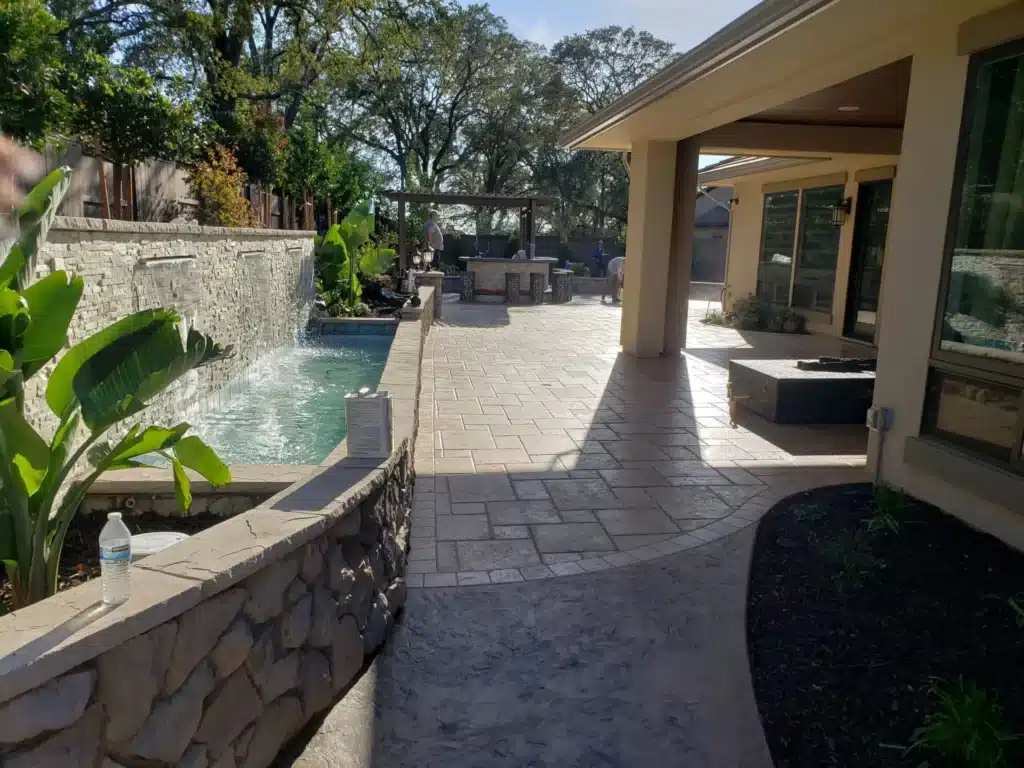
Pavers vs. Stamped Concrete Patios: Expert Guide to Choosing the Best Outdoor Patio Surface for Your Backyard
By Sean DeLong, Blue Rock Landscape
When it comes to enhancing your outdoor living space, the choice between pavers and stamped concrete patios can significantly impact both aesthetics and functionality. This article delves into the key differences, benefits, and considerations of these two popular patio surfaces, helping you make an informed decision for your backyard. Pavers are individual units made from various materials, while stamped concrete is a single slab that mimics the appearance of stone or brick. Understanding these distinctions is crucial for homeowners looking to create a beautiful and durable outdoor area. Throughout this guide, we will explore the durability, design flexibility, costs, and maintenance needs of both options, ultimately guiding you to the best choice for your specific needs.
Beyond just visual appeal, the choice of patio material also plays a crucial role in the thermal comfort of your outdoor living space.
Hardscape Design for Outdoor Thermal Comfort
Effective landscape design, which optimizes solar irradiation and absorbed heat to reduce mean radiant temperature (MRT), is critically important for enhancing outdoor thermal comfort, particularly given the ongoing global decline in vegetated areas. Using Cairo, Egypt as a case study, it examines how variations in design layouts and surface materials influence reflected solar energy and, consequently, the urban thermal climate.
The effective landscape design parameters with high reflective hardscapes: guidelines for optimizing human thermal comfort in outdoor spaces by design-a case on …, RA Abdelwahab, 2025
What Are the Key Differences Between Pavers and Stamped Concrete Patios?
Pavers and stamped concrete differ in several fundamental ways that affect their performance and appearance.
- Durability: Pavers are known for their strength and ability to withstand heavy loads, making them ideal for high-traffic areas. In contrast, stamped concrete can crack under pressure if not properly installed.
- Maintenance Requirements: Pavers require periodic cleaning and sealing to maintain their appearance, while stamped concrete may need resealing every few years to prevent fading and wear.
- Cost Analysis: Generally, pavers can be more expensive upfront due to the cost of materials and installation, whereas stamped concrete may offer a lower initial investment but can incur higher repair costs over time.
These differences highlight the importance of considering your specific needs and preferences when choosing between these two patio options.
How Do Material Types Affect Patio Durability and Appearance?
The materials used in pavers and stamped concrete play a significant role in their durability and visual appeal.
Pavers are typically made from concrete, brick, or natural stone, each offering unique benefits. For instance, concrete pavers are versatile and can be molded into various shapes and colors, while natural stone pavers provide a timeless aesthetic but can be more expensive. Stamped concrete, on the other hand, is made from a concrete mix that is poured and then stamped with patterns to mimic other materials. This method allows for a wide range of designs and colors, but the underlying concrete can be susceptible to cracking if not properly cured.
Understanding the material properties helps homeowners select the best option that aligns with their desired durability and aesthetic goals.
What Design Flexibility Does Each Patio Surface Offer?
Both pavers and stamped concrete offer unique design flexibility, allowing homeowners to create personalized outdoor spaces.
- Customization Options: Pavers come in various shapes, sizes, and colors, enabling intricate patterns and designs. Homeowners can mix and match different types of pavers to achieve a unique look.
- Design Patterns: Stamped concrete can replicate the appearance of natural stone, brick, or tile, providing a seamless look that can be tailored to match the home’s architecture.
- Color Choices: Both options allow for a variety of color choices, but stamped concrete can be stained or dyed to achieve specific hues, while pavers maintain their color through the material itself.
This design flexibility ensures that homeowners can create a patio that complements their outdoor living space and personal style.
What Are the Benefits and Drawbacks of Paver Patios?

Paver patios come with several advantages and disadvantages that homeowners should consider.
Benefits of Paver Patios
- Durability: Pavers are highly durable and can withstand extreme weather conditions without cracking.
- Easy Repairs: If a paver becomes damaged, it can be easily replaced without affecting the surrounding units.
- Aesthetic Variety: The wide range of colors and styles available allows for creative designs.
Drawbacks of Paver Patios
- Higher Initial Cost: The upfront cost of paver installation can be higher than stamped concrete.
- Weed Growth: The joints between pavers can allow weeds to grow, requiring regular maintenance.
- Settling Issues: Over time, pavers may settle unevenly, leading to a need for adjustments.
Understanding these pros and cons can help homeowners weigh their options effectively.
What Are the Advantages and Limitations of Stamped Concrete Patios?

Stamped concrete also presents its own set of advantages and limitations.
Advantages of Stamped Concrete Patios
- Cost-Effective: Stamped concrete is generally less expensive to install than pavers, making it an attractive option for budget-conscious homeowners.
- Seamless Appearance: The continuous surface of stamped concrete provides a sleek and modern look.
- Variety of Designs: Stamped concrete can mimic various materials, offering a high-end appearance at a lower cost.
Limitations of Stamped Concrete Patios
- Cracking Potential: Stamped concrete is more prone to cracking, especially if not installed correctly.
- Repair Challenges: Repairing stamped concrete can be more complicated and costly than replacing individual pavers.
- Limited Texture: While it can mimic other materials, stamped concrete lacks the natural texture and feel of real stone or brick.
These factors are essential for homeowners to consider when deciding on their patio surface.
How Do Pavers and Stamped Concrete Compare in Installation Cost and Longevity?
When evaluating pavers and stamped concrete, installation costs and longevity are critical factors.
| Material Type | Cost per Square Foot | Expected Longevity |
|---|---|---|
| Pavers | $10 – $25 | 25 – 50 years |
| Stamped Concrete | $8 – $20 | 10 – 30 years |
Pavers typically have a higher initial cost but offer greater longevity and easier repairs. Stamped concrete may be more affordable upfront but can incur higher costs over time due to potential repairs and maintenance needs. Understanding these financial implications is vital for homeowners planning their outdoor projects.
How Can You Choose the Best Patio Surface for Your Backyard?
Choosing the right patio surface involves considering several factors that align with your lifestyle and preferences.
- Assess Your Budget: Determine how much you are willing to spend on installation and maintenance.
- Consider Usage: Think about how you will use the patio. High-traffic areas may benefit from the durability of pavers.
- Evaluate Aesthetics: Decide on the look you want to achieve. Pavers offer more design flexibility, while stamped concrete provides a seamless appearance.
For personalized guidance, consulting with professionals can help clarify your options and ensure you make the best choice for your backyard.
Blue Rock Landscape specializes in custom landscape and hardscape services focused on creating outdoor living spaces in the Greater Sacramento Area, including El Dorado Hills, CA. If you’re considering a new patio, our team can help you explore the best options for your needs.
Where Can You See Examples of Paver and Stamped Concrete Patios in El Dorado Hills?
Seeing examples of completed projects can provide inspiration and clarity on what to expect from both paver and stamped concrete patios.
- Local Parks: Many parks in El Dorado Hills feature both types of patios, showcasing their durability and design.
- Residential Projects: Drive through neighborhoods to observe various installations and styles.
- Landscape Shows: Attend local home and garden shows to see displays and talk to professionals about your options.
These resources can help you visualize how each material might look in your own backyard.
How Can You Request a Consultation for Your Custom Patio Project?
If you’re ready to take the next step in creating your dream patio, requesting a consultation is easy.
- Contact Us: Call Blue Rock Landscape at (916) 343-0234 to discuss your project.
- Schedule an Appointment: We will set up a time to meet and assess your space.
- Discuss Options: During the consultation, we will explore materials, designs, and costs tailored to your needs.
Taking this step can help you turn your vision into reality with expert guidance and support.
To see some of our recent work, visit our portfolio.
If you’re ready to discuss your project, contact us today!